
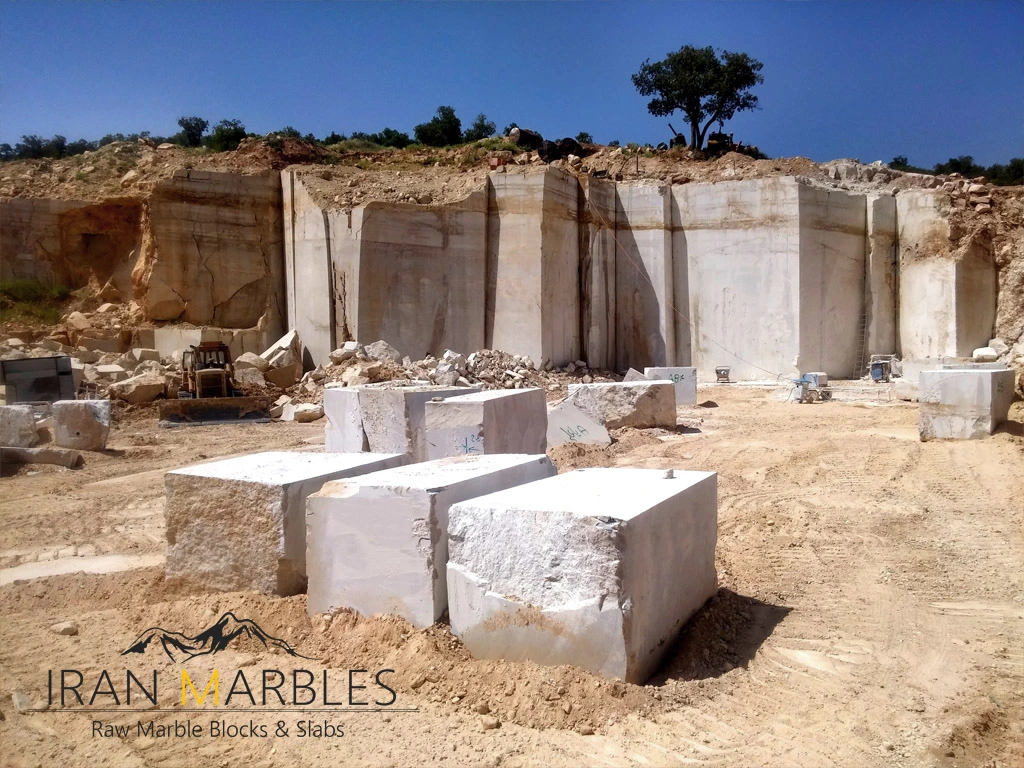
The building facade is architecture's public face — the surface that defines a structure's character from the street, communicates the owner's values, and must perform reliably under decades of weathering without losing its visual integrity. Natural stone has been the exterior cladding material of choice for the world's most significant buildings for millennia: the Parthenon's marble, the Getty Center's travertine, the Renaissance Center in Detroit's limestone, which has withstood decades of harsh weather conditions with minimal maintenance requirements.
In 2025, natural stone's popularity as a facade material is growing, not declining. Natural stone is gaining increasing popularity as a material harnessed to create dramatic and high-performing rainscreen facades — driven by architect and client demand for material authenticity, longevity, and the unique character that no manufactured material can replicate. A property with a natural stone facade is always valued higher on the market — it is not just a decorative expense but an investment that affirms the property's prestige and long-term vision.
But specifying natural stone for exteriors is fundamentally more demanding than specifying it for interiors. The technical requirements are stringent — water absorption, freeze-thaw resistance, UV stability, panel thickness, and anchorage system engineering all require careful specification decisions. Choosing the wrong stone, or specifying the right stone in the wrong system, can result in surface spalling, staining, efflorescence, or structural panel failure that is expensive and disruptive to remedy.
This guide explains the technical requirements for exterior stone facade specification, compares the Iranian stones available from Iranmarbles across all relevant performance criteria, and provides practical guidance for architects, facade engineers, and procurement managers making cladding specification decisions.
Why Exterior Specification Is Different: The Technical Demands
Interior stone specifications are primarily visual and tactile decisions — color, finish, pattern, and maintenance considerations dominate. Exterior facades add a layer of technical performance requirements that have no interior equivalent:
Freeze-thaw cycling
Water absorption is the single most important technical property for exterior stone specification. Stone's pores absorb rainwater; when temperatures drop below 0°C, that water expands by approximately 9% as it freezes. This expansion creates internal pressure within the stone's pore structure — pressure that, repeated over thousands of freeze-thaw cycles across a building's lifetime, can cause surface spalling (flaking), cracking, and structural deterioration.
The standard test methodology is ASTM C880 (flexural strength) and freeze-thaw cycling tests per ASTM C666 equivalent for stone. The general rule: water absorption below 0.50% is considered safe for most freeze-thaw climates without additional treatment. Stones with water absorption of 0.50–1.50% can be specified in moderate freeze-thaw climates with penetrating sealant protection. Above 1.50% requires very careful specification management in cold climates.
UV and weathering stability
Outdoor stone is exposed to ultraviolet radiation, acid rain, atmospheric pollution, thermal cycling, and biological agents (algae, lichen, moss). Different stone types respond very differently to these exposures:
- Dark stones (like Pietra Gray marble) may show color fading or surface bleaching in very high UV climates over decades
- Light stones with iron content may develop surface rust staining from oxidizing iron minerals under persistent moisture exposure
- Calcite-based stones (marble, limestone) are chemically reactive to acidic rain and urban pollution, which gradually dissolves surface calcite — producing a natural patina on limestone (often considered desirable) but etching and dulling polished marble surfaces
Thermal movement
Natural stone expands and contracts with temperature changes. A 3 cm stone panel on a south-facing facade in a hot climate may experience temperature swings of 60–80°C between summer maximum and winter minimum. This thermal movement must be accommodated in the anchorage system design — inadequate provision for movement causes panel cracking, anchor point failure, or loss of panel.
Wind load resistance
Exterior stone panels are structural elements resisting wind pressure loads. Panel thickness, stone flexural strength, and anchor system design must be engineered to meet wind load requirements for the building's location, height, and exposure category. Stone safety factors can vary widely because of its natural origin and non-homogeneous structure. In time, stone can change its physical properties due to heating-freezing cycles and saturation — all factors that facade engineers must account for in their calculations.
The Two Facade Installation Systems
Understanding which installation system is appropriate for your project is as important as the stone specification itself.
Direct adhesion (traditional mortar bed)
- Stone panels adhered directly to the wall using cement-based mortar — lower cost, faster installation for smaller lightweight tiles
- Bond is less reliable for large, heavy panels; susceptible to cracking from thermal expansion; water can seep through mortar joints
- Appropriate for small-format tiles (up to 60×60 cm, 2 cm thickness) in interior or sheltered exterior applications in benign climates only
Rainscreen / ventilated facade system
- Stone panels mechanically anchored to a subframe with a ventilated air cavity — the standard for high-quality construction today
- Cavity manages moisture, accommodates thermal movement, and integrates continuous insulation
- Appropriate for all large-format exterior cladding, high-rise applications, cold-climate specifications, and premium building projects
- Minimum panel thickness: typically 3 cm for limestone, 2.5–3 cm for dense marble — calculated by facade engineers per project
The beauty and durability of a stone facade depend 50% on the quality of the installation — specifying the right stone in the wrong system negates the stone's performance advantages.
Exterior Performance Assessment: Iranmarbles Stones
Gohare Beige Limestone — The Primary Facade Choice
Water absorption: 1.27% | Compressive strength: 1,180 kg/cm² | FOB: $112/ton
Gohare limestone is the most widely specified Iranmarbles stone for exterior facade applications, and the technical data supports this selection clearly. While limestone is sometimes characterized as a "soft" exterior material, dense limestones like Gohare behave very differently from porous or weak limestone varieties.
Freeze-thaw performance: At 1.27% water absorption, Gohare sits in the moderate zone that requires penetrating sealant specification for freeze-thaw climates but performs reliably in temperate and warm climates without treatment. In the Middle East, South Asia, Mediterranean, and temperate European climates — markets where Iranian stone has its strongest export presence — Gohare's absorption level is entirely acceptable for facade specification. In cold-climate applications (Northern Europe, Northern China, Russia, Canada), thorough penetrating sealant application before installation and reapplication every 5–7 years is recommended to manage the absorption level.
Weathering character: Dense limestone — which makes limestone a more forgiving and practical choice for large-scale facades — develops a natural patina under atmospheric exposure that many architects consider architecturally desirable. Unlike polished marble, which shows acid-rain etching as a visible surface defect, honed or brushed limestone develops a surface character that reads as natural and aged rather than damaged. The Renaissance Center in Detroit's limestone facade has withstood decades of harsh weather conditions with minimal maintenance — a real-world precedent for dense limestone's exterior durability.
Color stability: Gohare's warm beige color is stable under UV exposure. Its calcium carbonate composition is not subject to the iron-based rust staining that affects some limestone varieties, and its dense structure resists biological colonization (algae, lichen) better than porous limestones.
Finish recommendation for exterior: Honed, brushed, or bushhammered finishes are preferred for exterior limestone. Polished limestone is not recommended for rain-exposed exterior surfaces — the polish is quickly lost to weathering and becomes difficult to maintain. Honed and brushed finishes weather naturally and require no maintenance to maintain their appearance character.
Best for: Hotel and commercial building facades in temperate and warm climates; large-scale continuous cladding applications where color consistency across thousands of square meters is required; rainscreen facade systems in residential and commercial buildings; covered walkway and portico cladding in all climates.

Harsin Beige Marble — The Premium Facade Marble
Water absorption: 0.31–0.96% (by grade) | Compressive strength: 1,180 kg/cm² | FOB: $125/ton
Harsin beige marble has specific documented technical advantages for exterior specification that distinguish it from most marble types. The product page explicitly notes that Harsin marble "has proven to be more resistant against frost" compared to similar marbles — a statement backed by its low water absorption data (as low as 0.31% for Exportable Quality grade).
Freeze-thaw performance: Exportable Quality Harsin marble at 0.31% water absorption is well below the 0.50% threshold for safe freeze-thaw specification without treatment. This means Harsin can be specified for exterior facades in cold climates — Northern Europe, Russia, Northern China — with appropriate penetrating sealant, where most marble types would require much more careful qualification.
UV and weathering: As a warm-toned marble, Harsin's beige-cream color is relatively stable under UV exposure. The calcite surface will develop a micro-texture from acid rain exposure over decades, gradually reducing the polish level — standard for any exterior marble specification. In the context of contemporary architecture where honed and brushed marble finishes are often preferred for facades, this weathering behavior is manageable and visually acceptable.
Finish recommendation for exterior: Honed or sandblasted finish for facade panels. Polished marble facade panels are not recommended for rain-exposed applications — polishing procedures close the pores but the polish is not maintained under weathering. Marble and granite are recommended for interior vertical walls in polished finish; exterior facade marble should be honed.
Best for: Premium hotel and residential building facades in temperate and cold climates where the warm beige marble aesthetic is specified; belt courses, entrance surrounds, and architectural accent elements on commercial buildings; luxury villa facades in Mediterranean climates; covered facade zones in all climates.
Pietra Gray Marble — The Statement Facade Element
Water absorption: 0.42% | Compressive strength: 1,350 kg/cm² | FOB: $220/ton
Pietra Gray marble's 0.42% water absorption places it comfortably within the safe range for exterior specification in most climates, and its 1,350 kg/cm² compressive strength is the highest in the Iranmarbles range — providing strong structural performance in facade panel applications.
The outdoor limitation: While Pietra Gray's technical properties support exterior specification, the primary consideration for exterior use is aesthetic rather than structural. Polished Pietra Gray marble exposed to acid rain and UV radiation will develop surface etching and micro-texture changes that alter the appearance of the highly polished charcoal surface over time. The dramatic visual character of Pietra Gray — its mirror polish and crisp white-on-dark-gray veining — is a characteristic of the interior specification; exterior exposure changes this character.
Appropriate exterior applications: Pietra Gray marble is most effectively used for exterior accent elements rather than continuous primary facade cladding — entrance portal framing, protected atrium walls, covered colonnade cladding, and architectural feature elements where the stone is sheltered from direct rain exposure. In these applications, the stone retains its polished character and delivers powerful visual impact at key architectural moments.
In hot, dry climates (Gulf, Middle East): Without freeze-thaw risk and with lower acid rain exposure than industrial European climates, Pietra Gray marble can be specified more broadly for exterior cladding on prestige commercial and hospitality buildings. The Middle East luxury hospitality market uses dark marble extensively for protected exterior elements and entrance features.
Finish recommendation for exterior: Honed or sandblasted for rain-exposed continuous facade. Polished acceptable for sheltered accent elements in dry climates.

Patris Gray Limestone — Limited Exterior Use
Water absorption: 1.82% | Compressive strength: 450 kg/cm² | FOB: $99/ton
As discussed in the Patris limestone guide, Patris gray limestone's 1.82% water absorption and 450 kg/cm² compressive strength limit its exterior specification range compared to the other Iranmarbles stones.
Appropriate exterior applications: Patris limestone can be specified for exterior use in temperate climates without significant freeze-thaw cycling, with thorough penetrating sealant treatment before installation. Its natural gray-brown tone and snakeskin pattern weather with character — developing a natural surface patina that enhances rather than detracts from its appearance in most cases. However, its lower compressive strength means it is not appropriate for large-panel rainscreen facade systems where structural panel performance under wind loads is required without careful engineering. Its best exterior use cases are sheltered facade elements: covered walkways, entrance lobbies, ground-floor cladding under protective overhangs, and architectural feature panels in protected positions.
Not recommended for: High-rise facades, cold-climate facades with regular freeze-thaw exposure, permanently wet surfaces, or exterior paving.
Crystal Marbles for Exterior Use — Specialty Applications Only
Azna crystal: 0.22% water absorption | Aligudarz crystal: 0.10% water absorption
Both Iranian crystal marbles have extraordinarily low water absorption that technically qualifies them for most exterior climates from a freeze-thaw perspective. However, their primary value — the brilliant mirror polish, the luminous crystalline quality, the book-match pattern capability — is best preserved in interior applications where it is not subject to the weathering that changes polished marble's appearance over time.
Limited exterior use cases: Protected feature elements on luxury residential facades, sheltered entrance portal cladding in dry climates (Gulf, South Asia), covered atrium exterior walls. Both stones are primarily interior materials with technical properties that allow selective exterior specification where the stone is sheltered.
Stone Performance by Climate Zone
Use this matrix to guide stone selection based on your project's climate exposure:
| Climate zone | Freeze-thaw risk | Recommended primary facade stone | Notes |
|---|---|---|---|
| Hot arid (Gulf, Middle East, North Africa) | None | Gohare limestone or Harsin marble | Wide selection suitable; dark stones may heat significantly |
| Mediterranean (Southern Europe, Turkey) | Low | Gohare limestone, Harsin marble, Pietra Gray accents | Standard sealant recommended for limestone |
| Temperate maritime (Northern Europe, Pacific Northwest) | Moderate | Gohare limestone with sealant, Harsin marble Exportable | Rainscreen system essential; honed finish |
| Continental (Central Europe, Northern China, Central Asia) | High | Harsin marble Exportable Quality, Gohare limestone with sealant | ASTM freeze-thaw testing recommended; sealant mandatory |
| Cold (Russia, Northern Canada, Scandinavia) | Very high | Harsin marble Exportable (0.31% absorption) | Specialist sealant; extended mortar joint specification |
| Tropical humid (Southeast Asia, South Asia) | None | Gohare limestone or Patris limestone | Biological growth resistance and drainage important |
| Coastal/marine (sea spray exposure) | Variable | Gohare limestone, Harsin marble | Salt-resistant sealant recommended; avoid porous stones |
Rainscreen System Specification for Iranian Stone Panels
For architects and facade engineers specifying Iranmarbles stone in rainscreen facade systems, the following technical parameters are relevant:
Panel thickness guidelines
- Gohare limestone: Minimum 3 cm (30 mm) for panels up to 120×60 cm. For larger format panels (120×120 cm), 3.5–4 cm may be required depending on wind load calculations and anchorage system design
- Harsin beige marble: Minimum 2.5–3 cm for standard panel sizes. Higher density than limestone permits slightly thinner specification in equivalent wind load conditions
- Pietra Gray marble: Minimum 2.5 cm; highest compressive strength in the range (1,350 kg/cm²) provides good structural performance at standard thicknesses
Facade engineers should calculate minimum optimal thickness based on specific project parameters — panel dimensions, building height, location wind map, and chosen fixing system. Stone safety factors can vary widely because of the stone's natural origin and non-homogeneous structure.
Fixing system selection
Two primary systems are used for natural stone rainscreen facades:
Concealed anchor systems: Anchors are embedded in the stone panel's edges or back face, invisible from the facade surface. Produces a clean, joint-dominated facade appearance without visible fixing hardware. Preferred for premium architectural projects.
Exposed clip systems: Stainless steel clips engage the panel edges and are visible at horizontal joints. More economical than concealed systems. Appropriate for less prestigious commercial and residential projects.
Both systems must use stainless steel or aluminum fixings — not galvanized steel, which corrodes at the stone contact point, causing iron staining on the stone surface.
Movement joint specification
Movement joints must be incorporated in facade stone panel layouts to accommodate:
- Thermal expansion of the stone panels (typically 8–12 mm per 10 m of continuous cladding for limestone and marble)
- Differential movement between the stone cladding and the building's structural frame
- Construction tolerances
Joints are typically 8–12 mm wide, filled with UV-stable silicone sealant in a color matched to the stone or expressed as a design feature of the facade pattern.
Design Directions: Stone Facades in 2025
Contemporary architecture's direction for natural stone facades in 2025 reflects broader trends in material specification:
Textured finishes gaining over polished: Honed, brushed, and bushhammered finishes are increasingly preferred for exterior stone in contemporary architecture, replacing the polished facade stone of the previous decade. Textured finishes weather more gracefully outdoors — they do not show the gradual loss of polish that polished exterior stone inevitably experiences — and they align with the current design preference for honest, tactile material expression over high-gloss finish.
Style-driven selection: Material character should follow the project's design language. Modern, minimalist — opt for solid-colored stone in grey tones, subtly veined marble. Classic, neoclassical — marble and limestone in cream, gold, or white tones are the number one choice. Rustic, farmhouse — split-face stone is the perfect answer. Gohare limestone's calm beige suits both neoclassical and contemporary modernist facade design. Patris limestone's distinctive snakeskin pattern suits biophilic and organic architectural expressions.
Large-format panel ambitions: The trend toward large-format stone panels in interiors is echoed in facades — 120×60 cm and larger panel formats are increasingly specified in commercial rainscreen systems where the continuous stone surface and minimal joint lines create a more monumental facade expression. Gohare limestone, available in blocks large enough to produce panels of this size, is particularly well-positioned for this specification direction.
Authenticity premium: In a market where high-quality porcelain panels that convincingly mimic stone are widely available, architects and clients are increasingly willing to pay a premium for genuine natural stone because its authenticity — the unique veining, the geological history, the irreproducible character — is precisely what it contributes to the building's identity that no synthetic material can replicate.

Related articles:


Frequently Asked Questions
Which Iranian stone is best for building facades?
For most exterior facade applications, Gohare beige limestone is the most suitable stone in the Iranmarbles range — offering near-marble technical performance (1,180 kg/cm² compressive strength, 2.9 mm abrasion resistance), good color consistency across large volumes, and reliable supply capacity. Its 1.27% water absorption is appropriate for temperate and warm climates with standard penetrating sealant treatment. For premium facades in cold climates, Harsin beige marble Exportable Quality (0.31% water absorption) offers superior freeze-thaw resistance.
Can marble be used on building facades?
Yes, but with careful specification. Harsin beige marble is specifically noted for its frost resistance and is appropriate for facade use in most climates with standard sealant treatment. Pietra Gray marble has sufficient technical performance for exterior use in temperate and warm climates. Both should be specified in honed or sandblasted finish rather than polished for rain-exposed exterior applications.
What water absorption level is safe for exterior stone facades?
The standard threshold is below 0.50% for safe specification in severe freeze-thaw climates without treatment. Stones with 0.50–1.50% water absorption can be specified in moderate freeze-thaw climates with penetrating sealant. Above 1.50% requires specialist specification management in cold climates. Harsin marble Exportable Quality (0.31%) and Pietra Gray marble (0.42%) meet the strictest threshold. Gohare limestone (1.27%) is appropriate with sealant in temperate climates.
What is a rainscreen facade system and why is it required for stone cladding?
A rainscreen (ventilated facade) system mechanically anchors stone panels to a subframe with a ventilated air cavity between the stone and the building wall. The cavity manages moisture that penetrates behind the stone, draining and evaporating it rather than allowing it to accumulate. It also accommodates thermal movement of the panels and integrates continuous insulation. The rainscreen system is the standard for all large-format stone facade specification on quality construction projects.
What thickness should stone facade panels be?
For Gohare limestone in standard commercial facade applications, minimum 3 cm panel thickness is the standard recommendation for panels up to 120×60 cm. For larger format panels, facade engineers calculate the minimum optimal thickness based on material properties, panel dimensions, wind load requirements for the building's location and height, and the chosen anchor system.
Can Patris limestone be used on building facades?
With careful specification in the right applications. Patris gray limestone has 1.82% water absorption, which exceeds the standard threshold for cold-climate facade specification without specialist treatment. In temperate climates without significant freeze-thaw cycling — the Middle East, South Asia, Mediterranean, Southeast Asia — with thorough penetrating sealant treatment, Patris can be used for sheltered facade elements. See the complete Patris limestone guide for full application guidance.
Source Facade Stone from Iranmarbles
Iranmarbles (Kaniyar Sang Zagros) supplies natural stone blocks for facade specification projects, with direct quarry access to Gohare limestone, Patris limestone, Harsin marble, Pietra Gray marble, and Azna and Aligudarz crystal from Lorestan, Kermanshah, and Isfahan provinces.
We provide full technical documentation, large-format block supply for 120×60 cm and larger panel production, grade-specific lot-matched sourcing, and technical support for specification. Browse our complete product range.
Contact our team at info@iranmarbles.org or WhatsApp +98 935 700 0285 to discuss your facade specification requirements. For procurement guidance, see our complete stone import guide.