
Iran is one of the most significant natural stone exporters in the world. With an estimated 47 billion tons of stone reserves across approximately 1,900 active decorative stone quarries, Iran holds an extraordinary variety of marble, limestone, and crystal stone resources — many of which are available nowhere else on earth. From the famous Persian Pietra Gray marble of Isfahan province to the Gohare Beige Limestone and Azna White Crystal of Lorestan, Iranian stone blocks are imported by processing factories, contractors, and developers in China, Turkey, Italy, India, Greece, and the United Arab Emirates.
If you are evaluating Iranian natural stone for the first time, or if you have previously sourced stone from other countries and want to understand how the Iranian export process works, this guide covers every step — from identifying the right product and supplier, through sampling and pricing, to container loading at Bandar Abbas port and receiving your shipment.
Why Import Natural Stone from Iran?
Before walking through the process, it is worth understanding why Iran has become such a dominant force in the global stone block trade.
Price advantage: Iranian stone blocks are consistently priced lower than equivalent material from European origins. Pietra Gray marble is available FOB from $220 per ton, Gohare Beige Limestone from $112 per ton, and Patris Gray Limestone from $99 per ton — making them among the most cost-competitive natural stones available globally for their quality tier.
Variety and exclusivity: Many Iranian stone types — including Pietra Gray, Gohare, Harsin Beige Marble, and Aligudarz White Crystal — are quarried exclusively in Iran. You cannot source an authentic version of these stones from any other country.
Established export infrastructure: Iran has been exporting natural stone internationally for decades. Bandar Abbas port handles large-volume container exports efficiently, with well-established freight routes to China (17–25 days transit), Turkey (7–10 days by road or 10–14 days by sea), and India (5–8 days).
Direct quarry access: Unlike trading intermediaries, established Iranian stone companies like Iranmarbles operate directly from quarry to export yard — eliminating middlemen and ensuring consistent quality control across extraction, grading, and shipment.
Step 1: Identify the Right Stone for Your Project
The first step is determining which stone type matches your technical requirements, aesthetic goals, and target price point. Iran produces stone across multiple categories, and the right choice depends on your end application — whether you are a processing factory producing slabs and tiles, a contractor sourcing for a specific construction project, or a distributor building inventory.
Iranian stone blocks available for export
| Stone | Type | Color | FOB Price | Best For |
|---|---|---|---|---|
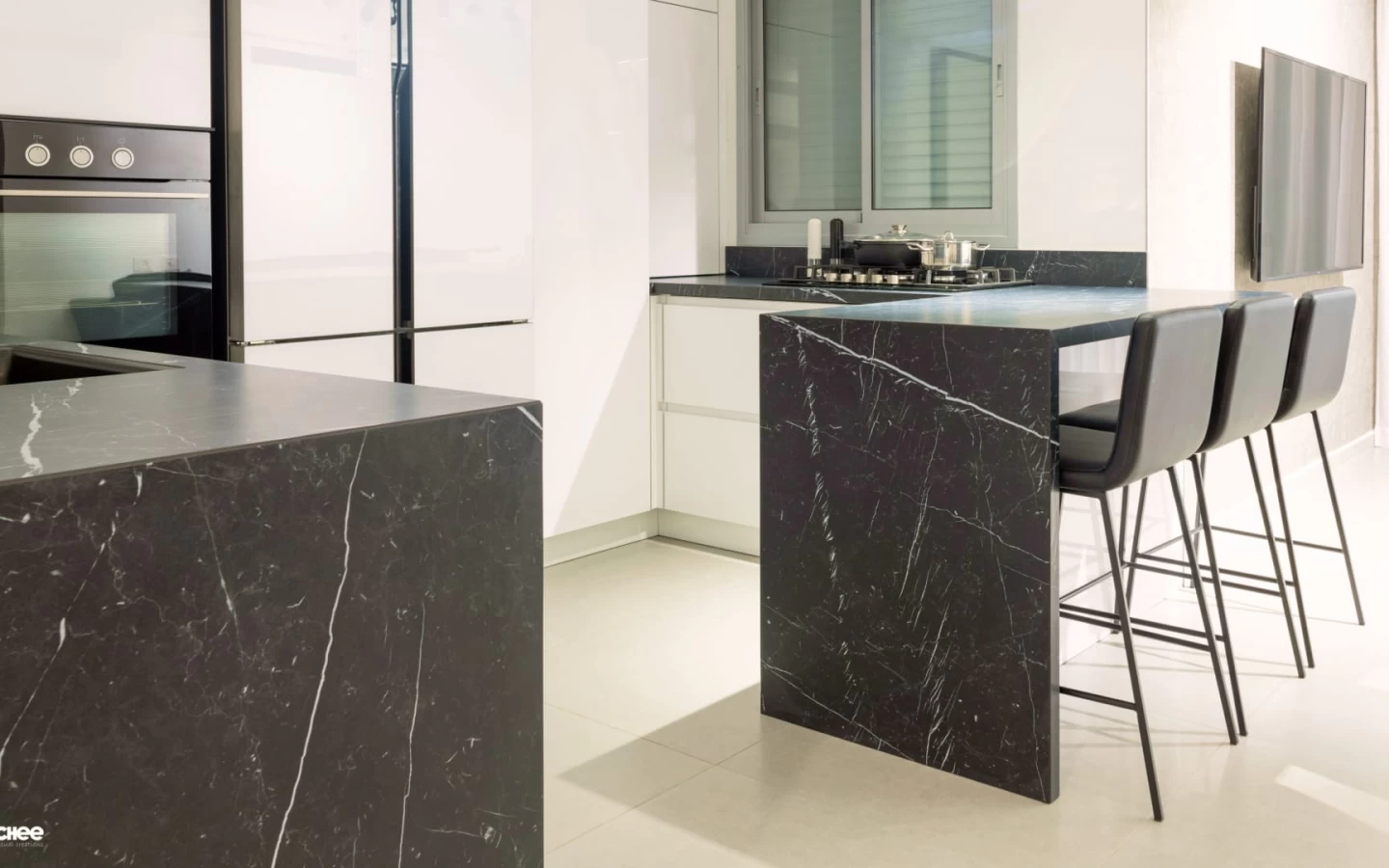
| Pietra Gray Marble | Marble | Charcoal-gray, white veins | From $220/ton | Luxury interiors, slabs, facades |
| Harsin Beige Marble | Marble | Warm beige-cream | From $125/ton | Residential and commercial interiors |
| Gohare Beige Limestone | Limestone | Warm beige | From $112/ton | Floors, facades, high-traffic areas |
| Patris Gray Limestone | Limestone | Cool gray | From $99/ton | Facades, pavements, modern architecture |
| Azna White Crystal | Crystal marble | White, subtle veins | From $157/ton | Luxury bathrooms, book-match applications |
| Aligudarz White Crystal | Crystal marble | Bright white | From $162/ton | Premium interiors, countertops, slabs |
If you are a stone processing factory, your primary considerations are block size consistency, grade uniformity, and price per ton. If you are procuring for a specific architectural project, color consistency and technical specifications (water absorption, compressive strength, abrasion resistance) become equally important.
Step 2: Find and Verify a Reliable Iranian Stone Supplier
Finding the right supplier is the most critical step in the entire process. The Iranian stone export market includes direct quarry operators, intermediary traders, and export agents — and the quality, reliability, and pricing vary significantly between them.
What to look for in a supplier
Direct quarry access: Suppliers who own or directly manage quarry operations can guarantee consistency and quality in ways that traders cannot. They can also respond to custom requests — specific block dimensions, particular grade percentages, or inspection access.
Export track record: Look for suppliers with documented export experience to your region. A company that has shipped to China, Turkey, and Europe for over a decade understands container loading, documentation requirements, and the specific expectations of international buyers.
Transparent grading system: Reliable Iranian exporters grade their stone blocks at extraction, typically into Exportable Quality, Super Quality, and 1st Grade categories. Ask any prospective supplier to explain their grading criteria clearly before requesting pricing.
Physical storage yard: Companies with a dedicated storage yard — not just quarry access — can provide faster order fulfillment and give you the ability to inspect blocks before shipment.
Iranmarbles, operating from a 20,000 m² facility in Khorramabad, Lorestan, has supplied stone blocks to companies in China, Turkey, Italy, India, the USA, and Greece for over 20 years with direct access to quarries across a 200 km radius in Lorestan and Isfahan provinces.
Where to search for Iranian stone suppliers
- StoneContact.com — the world's largest stone B2B directory, with an active Iran supplier section
- StoneAdd.com — Iran-specific stone supplier directory
- Europages.com — European B2B directory with Iranian stone supplier listings
- Direct web search — searching for specific stone names (e.g., "Pietra Gray marble block supplier Iran") typically surfaces established exporters directly
Step 3: Request Samples and Technical Specifications
Never commit to a stone order without physically evaluating samples. This is standard practice in the global stone trade and any reputable Iranian exporter will accommodate sample requests without hesitation.
What to request in your sample package
Physical block sample: Request a cut slab section of approximately 30×30 cm from the specific grade you are considering. The sample should come from a representative block — not a hand-selected showpiece.
Laboratory test report: Ask for an independent laboratory report confirming the stone's physical properties: water absorption, compressive strength, abrasion resistance, specific weight, and porosity. For reference, Pietra Gray marble has a water absorption rate of 0.42% and compressive strength of 1,350 kg/cm². These figures should match published specifications.
Grade comparison samples: If the supplier offers multiple grades (exportable, super, 1st grade), request a sample of each so you can evaluate the visual difference and decide which grade matches your application and budget.
High-resolution block photos: Before committing to a container order, request current photos of the actual available stock in the storage yard — not catalog images.
Sample shipping
Iranian suppliers typically ship samples via DHL, FedEx, or TNT international express. Sample shipping costs are either covered by the supplier as a sales service or shared between buyer and supplier. Clarify this upfront. Standard sample delivery time to China, Turkey, or India is 3–7 business days.
Step 4: Understand FOB Pricing and Request a Proforma Invoice
Iranian stone is almost universally priced FOB (Free On Board) Bandar Abbas — meaning the price quoted by the supplier covers the stone, loading it into a container, transporting the container to Bandar Abbas port, and all export clearance costs. Your cost begins from the moment the container is loaded aboard the vessel.
What FOB price includes
- Stone block cost per ton
- Packaging (wooden cradles, steel strapping)
- Inland transport from quarry/storage yard to Bandar Abbas port
- Iran export customs clearance and documentation
- Loading onto the vessel at Bandar Abbas
What FOB price does NOT include
- Ocean freight from Bandar Abbas to your destination port
- Destination port charges and customs clearance
- Import duties and VAT in your country
- Inland delivery from your port to your facility
Calculating your landed cost
To accurately compare Iranian stone with alternatives, calculate your full landed cost — FOB price per ton + ocean freight per ton + destination customs costs + import duties. For buyers in China, the total landed cost for Iranian marble blocks typically remains 30–50% below equivalent European or domestic Chinese alternatives after all costs are added.
Proforma Invoice
Once you are satisfied with samples and pricing, request a Proforma Invoice (PI) from the supplier. This document specifies:
- Product description, grade, and quantity
- Unit price (FOB) and total value
- HS code (for Iranian marble blocks: typically 2515.12 for raw blocks or 6802.21 for worked stone)
- Payment terms
- Estimated shipment date
- Port of loading (Bandar Abbas) and Incoterm (FOB)
Review the PI carefully before signing. The PI becomes the basis for your sales contract and payment arrangement.
Step 5: Agree on Payment Terms
Payment is the most sensitive part of any transaction with an Iranian supplier, particularly for first-time buyers. The global banking restrictions affecting Iran mean that payment methods differ from standard international trade, and understanding your options is essential.
Common payment methods for Iranian stone exports
Telegraphic Transfer (T/T) — most common for established relationships
Wire transfer of funds in advance or split — typically 30% deposit against PI and 70% balance against shipping documents (Bill of Lading copy). Once a supplier has been verified and a working relationship is established over several shipments, T/T is the most efficient payment method.
Letter of Credit (L/C)
A documentary L/C from your bank provides the highest level of security for both parties on large first orders. The supplier ships and presents documents to their bank; your bank releases payment upon confirmation. L/C is more complex and involves bank fees on both sides, but provides strong protection for high-value first transactions.
Escrow via third-party trade platforms
Some B2B platforms offer escrow services for Iran trade. Funds are held by the platform and released to the supplier upon confirmation of shipment documents. This is increasingly used for first orders.
Note for US-based buyers: The United States maintains broad sanctions on Iran under OFAC regulations. US companies and individuals should consult a trade compliance attorney before initiating any purchase from Iranian suppliers. Buyers in China, Turkey, India, the EU, and most other regions operate without such restrictions.
Step 6: Sign a Sales Contract
Before any payment is made, sign a formal Sales Contract that documents all agreed terms. A well-structured contract protects both parties and prevents disputes. Key clauses to include:
- Product specification: Stone type, grade, quantity (tons), block dimensions (min/max), and any specific color or vein requirements
- Price: FOB price per ton and total contract value
- Payment terms: Schedule and method
- Shipment timeline: Expected loading date and vessel departure
- Inspection rights: Buyer's right to inspect blocks at the storage yard or appoint a third-party inspection agency before loading
- Documentation: List of all shipping documents the seller must provide (Bill of Lading, Certificate of Origin, Commercial Invoice, Packing List, Phytosanitary Certificate for wooden packaging)
- Dispute resolution: Preferred jurisdiction and method (ICC arbitration is common in international stone trade)
Step 7: Pre-Shipment Inspection (Optional but Recommended)
For large orders — particularly first transactions — a pre-shipment inspection by an independent third party adds significant security. International inspection companies such as SGS, Bureau Veritas, and Intertek all offer pre-shipment inspection services in Iran.
An inspection report typically confirms:
- Quantity: number of blocks and total weight match the contract
- Dimensions: block sizes fall within specified tolerances
- Grade compliance: visual assessment matches the contracted grade
- Packaging: wooden cradles and steel strapping meet shipping standards
- No visible cracks, excessive color variation, or contamination
The cost of a pre-shipment inspection (typically $300–$600 depending on order size) is almost always recovered in quality assurance value on orders of $10,000 or more.
Step 8: Container Loading and Shipping from Bandar Abbas
Bandar Abbas (officially Shahid Rajaee Port) is Iran's primary container export port, located on the Strait of Hormuz in Hormozgan province. It is the busiest container port in Iran and handles the vast majority of natural stone block exports. The port has direct shipping connections to ports in China (17–25 days transit), India (5–8 days), Turkey via Mersin (10–14 days by sea), and UAE/Jebel Ali (2–3 days).
Container types for stone block shipments
Stone blocks are extremely heavy. A standard 20-foot container (20ft) has a maximum payload of approximately 28 tons, but the weight of stone often limits practical loading to 20–25 tons per 20ft container depending on the block dimensions and stacking pattern.
A 40-foot container (40ft) can accommodate more volume but not proportionally more weight — stone shipments are typically weight-limited, not volume-limited. Your supplier and freight forwarder will advise on the optimal container type for your order size.
Packaging for stone block export
Reputable Iranian exporters package stone blocks on wooden cradles (timber frames) secured with steel strapping bands. The wooden packaging must comply with ISPM 15 (International Standards for Phytosanitary Measures) — heat-treated timber that carries the official IPPC stamp — to satisfy import regulations in most countries. A Phytosanitary Certificate is required for the wooden packaging material and should be included in your document package.
Required shipping documents
Your supplier should provide the following documents after loading:
| Document | Purpose |
|---|---|
| Bill of Lading (B/L) | Title of ownership; required to collect goods at destination |
| Commercial Invoice | Product description, quantity, unit price, total value |
| Packing List | Number of blocks, gross/net weight, dimensions per block |
| Certificate of Origin | Issued by Iran Chamber of Commerce; certifies Iranian origin |
| Phytosanitary Certificate | Confirms wooden packaging is pest-free and ISPM 15 compliant |
| SGS/Inspection Report | If pre-shipment inspection was conducted |
Step 9: Customs Clearance at Your Destination Port
Once your container arrives at the destination port, you will need to clear it through customs. The process varies by country, but typically involves:
- Appointing a licensed customs broker in your country — strongly recommended for first-time stone importers
- Submitting the B/L and accompanying documents to customs authorities
- Paying import duties based on the HS code and declared value. The applicable HS code for Iranian marble blocks is typically 2515.12 (marble in rough or roughly trimmed blocks) or 6802.21 (marble, worked, for building or monuments)
- Physical inspection by customs may occur, particularly on first shipments from a new supplier or country of origin
- Collecting the container from the port terminal once clearance is complete
Engage your customs broker early — before the shipment arrives — to prepare all required documentation and avoid storage fees (demurrage) at the terminal.
Step 10: Building a Long-Term Supply Relationship
The first order from an Iranian stone supplier is always the most complex. Once your process is established — supplier verified, payment channel agreed, logistics partner confirmed, and documentation flow understood — repeat orders become significantly simpler and faster to execute.
Most stone processing factories that import from Iran establish a rhythm of monthly or quarterly container orders, with progressively less friction as both parties build trust and refine the process. Over time, buyers typically gain access to better block selection, priority allocation of limited-extraction stones like Pietra Gray marble, and more favorable payment terms.
Summary: The Import Process at a Glance
| Step | Action | Typical Timeline |
|---|---|---|
| 1 | Identify stone type and grade | 1–3 days |
| 2 | Identify and verify supplier | 3–7 days |
| 3 | Request and evaluate samples | 7–14 days (including transit) |
| 4 | Agree on FOB price and receive PI | 1–3 days |
| 5 | Agree on payment terms | 1–3 days |
| 6 | Sign sales contract | 1–2 days |
| 7 | Pre-shipment inspection (optional) | 3–5 days |
| 8 | Container loading and B/L issuance | 7–14 days |
| 9 | Ocean freight transit | 5–25 days (by destination) |
| 10 | Customs clearance and collection | 3–7 days |
| Total | First order, end to end | ~5–10 weeks |
Related articles:

Frequently Asked Questions
What is the minimum order quantity for Iranian stone blocks?
Most Iranian stone exporters, including Iranmarbles, supply by the container load — typically one 20ft container (approximately 20–25 tons net) as a minimum. For some products with limited availability like Pietra Gray marble, minimum orders may be larger. Contact us directly for current MOQ based on your required stone and grade.
How long does shipping from Iran to China take?
Sea freight from Bandar Abbas to major Chinese ports (Shanghai, Guangzhou, Xiamen, Ningbo) takes approximately 17–25 days transit time. Total order lead time including production, loading, and transit is typically 4–8 weeks from contract signing.
Is it legal to import stone from Iran?
For buyers in China, Turkey, India, the EU, UAE, and most other countries: yes, importing natural stone from Iran is fully legal. US buyers should consult a trade compliance attorney due to OFAC sanctions regulations before initiating any transaction.
What HS code is used for Iranian marble blocks?
The primary HS codes for Iranian natural stone block exports are 2515.12 for marble and calcareous stone in rough or roughly trimmed block form, and 6802.21 for worked marble. Your customs broker will confirm the correct code for your destination country's import tariff schedule.
Do Iranian stone suppliers offer pre-shipment inspection?
Yes. Reputable suppliers including Iranmarbles accommodate third-party pre-shipment inspections by agencies such as SGS, Bureau Veritas, or Intertek. We can also arrange for buyers or their representatives to visit our storage yard in Khorramabad to inspect blocks in person before loading.
What payment methods are accepted for Iranian stone exports?
The most common methods are Telegraphic Transfer (T/T) — typically 30% deposit against Proforma Invoice and 70% against shipping documents — and documentary Letter of Credit (L/C). Payment channels vary based on your country's banking relationships. Our sales team will advise on the most practical method for your location.
Start Your Order with Iranmarbles
Iranmarbles (Kaniyar Sang Zagros) has been exporting natural stone blocks to international buyers since 2004. With direct access to over 20 quarries across Lorestan and Isfahan provinces, a 20,000 m² storage facility in Khorramabad, and a track record of shipments to China, Turkey, Italy, India, the USA, and Greece, we are equipped to supply your order from initial inquiry through to container loading at Bandar Abbas.
Our available products for export include Pietra Gray Marble Block (FOB from $220/ton), Harsin Beige Marble Block (from $125/ton), Gohare Beige Limestone Block (from $112/ton), Patris Gray Limestone Block (from $99/ton), Azna White Crystal Block (from $157/ton), and Aligudarz White Crystal Block (from $162/ton).
To request samples, pricing, or a Proforma Invoice, contact our sales team via email at info@iranmarbles.org or directly on WhatsApp at +98 935 700 0285. We respond to all inquiries within 24 hours.